Give first, then request: The heart of relationship marketing
By Hannah Moss
Discover why giving before asking is at the heart of relationship marketing, and how sharing generously can build trust, create genuine connections and help your wellbeing business grow.
Join the Mindful Marketing Movement
What if, instead of starting your marketing by asking people to buy something, you started by giving them something useful?
Not as a clever sales tactic. Not because you expect something in return. But simply because you have knowledge, experience or encouragement that could genuinely help someone.
It might be a helpful blog post, a free resource, a thoughtful email or a conversation that gives someone a little more clarity.
This is the thinking behind our latest Marketing Mantra: Give first, then request.
It's also at the heart of relationship marketing – an approach that puts trust, connection and long-term relationships ahead of quick sales.
And for yoga teachers, therapists, coaches and other wellbeing businesses, it can be a much more natural way to approach marketing.
What is relationship marketing?
Relationship marketing is about building meaningful, lasting connections with the people you serve.
Rather than focusing solely on getting someone to make a purchase, you focus on helping them get to know you, understand what you offer and feel confident that you're the right person to help them.
It's a shift from transactions to relationships.
Of course, relationships are important in almost every business. But they're especially important in the wellbeing world, where people are often looking for something deeply personal.
- Someone choosing a yoga teacher might want to feel comfortable and welcome.
- Someone considering therapy needs to feel safe and understood.
- Someone booking a retreat may be making a significant investment of time, money and trust.
These decisions rarely happen just because someone has seen an advert or read a sales page.
People need time to connect with you and your approach. And one of the best ways to build that connection is to be genuinely helpful before asking them to take the next step.

Start by being useful
Think about the questions people ask you most often.
- Perhaps you're a yoga teacher and people regularly ask which style of yoga would suit them, or whether they need to be flexible before coming to a class.
- Maybe you're a therapist and people are unsure what to expect from their first session.
- Or perhaps you run retreats and people want to know whether they need previous experience, what a typical day looks like or how to choose the right retreat.
Every one of these questions is an opportunity to create something useful.
You could write a blog post, record a short video, send an email or create a simple downloadable guide.
And you don't need to give away all your expertise. Sometimes, answering one question clearly and thoughtfully is enough to make someone feel understood.
The important thing is to think about what your audience actually needs, rather than what you want to sell them.
When your marketing starts with helping, it begins to feel less like selling and more like sharing.

The difference between generosity and reciprocity
There's a concept in psychology called reciprocity: when someone does something kind or helpful for us, we often feel inclined to respond in some way.
This principle is sometimes used in marketing. A business gives away something free in the hope that people will feel more inclined to buy later.
But there's an important distinction between understanding reciprocity in marketing and deliberately using it to make people feel indebted to you.
At Wildheart, we believe generosity should come from a genuine desire to help.
- If you share a useful resource, it should still be useful to someone who never becomes a customer.
- If you answer a question, the answer should be helpful even if that person decides to work with someone else.
- And if you offer something for free, it shouldn't come with an unspoken obligation to buy.
That doesn't mean your generosity won't benefit your business. It often will.
People remember those who have helped them. They may return when they're ready, recommend you to a friend or simply become part of your community.
But those are possible outcomes of a genuine relationship, not debts that need to be repaid.
Give because you have something valuable to share, not because someone owes you something in return.
Giving first doesn't mean giving everything away
For people working in the wellbeing space, this is an important distinction.
Many of you are naturally generous with your time, energy and knowledge. Helping people is probably one of the main reasons you started your business in the first place.
But it's possible to give so much that you leave very little for yourself.
You might find yourself answering lengthy questions for free, offering informal advice that turns into unpaid work or feeling uncomfortable charging for something you're passionate about.
That's not what we're suggesting.
Giving first doesn't mean giving without boundaries.
You can share helpful information while recognising that your time, experience and expertise have real value.
For example:
- A therapist might publish an article about recognising signs of stress without offering free therapy sessions.
- A yoga teacher might share a simple breathing practice without giving away an entire course.
- A retreat leader might explain how to prepare for a retreat without offering individual consultations to everyone who enquires.
Your free content can help people understand their challenges and explore possible solutions. Your paid services provide the personalised support, structure or deeper experience that helps them move forward.
Both have value. And there's room for both.

Real-life example
At Wildheart, one way we put this into practice is through our free consultations. We offer around 45 minutes of our time, with no obligation to work with us afterwards. Of course, we'd love it if that conversation led to us working together, but that's not the only reason we offer it. We genuinely enjoy helping people find more clarity around their marketing, and we want them to come away with useful insights and practical advice, whether they become a client or not.
It's a good example of how generosity and healthy boundaries can work together. We're happy to share our knowledge and experience, while recognising that delivering a full brand strategy, website or SEO campaign is a different level of support.
And then, don't forget to ask
This is the second half of our mantra, and it's just as important as the first.
Because, while giving can come naturally to many wellbeing business owners, asking often feels much harder.
You might be happy to share advice, write articles and help people find their way. But when it comes to saying, "Would you like to work with me?", something changes.
Perhaps you worry about sounding pushy. Or you don't want to spoil a genuine connection by introducing money into the conversation.
But making an offer doesn't have to undermine the relationship you've built.
In fact, if someone has found your free content helpful, they may genuinely want to know how they can work with you.
The key is to make your invitation clear, honest and easy to decline.
That might sound like:
- "If you'd like some more personalised support, you can book a one-to-one session."
- "If you're ready to take this further, here's how our programme works."
- "Not sure where to start? You're welcome to get in touch for a chat."
There's no pressure, no manufactured urgency and no need to convince someone that they have a problem they didn't know about.
You're simply letting people know that help is available if and when they need it.
That's ethical marketing in practice: sharing generously, communicating clearly and respecting people's freedom to choose.

How to put this mantra into practice
You don't need an elaborate marketing strategy to start giving first. You can begin with three simple steps.
1. Answer one question your audience is already asking
Think of a question that comes up regularly in conversations with clients or prospective clients.
Write a short article, create a video or share a useful answer in your next email.
Keep it focused. One genuinely helpful answer is better than a long piece of content that tries to cover everything.
2. Make your knowledge easy to find
A helpful resource is even more valuable when people can discover it at the moment they need it.
Share it with your email subscribers, link to it from relevant pages on your website or make it part of a growing library of useful content.
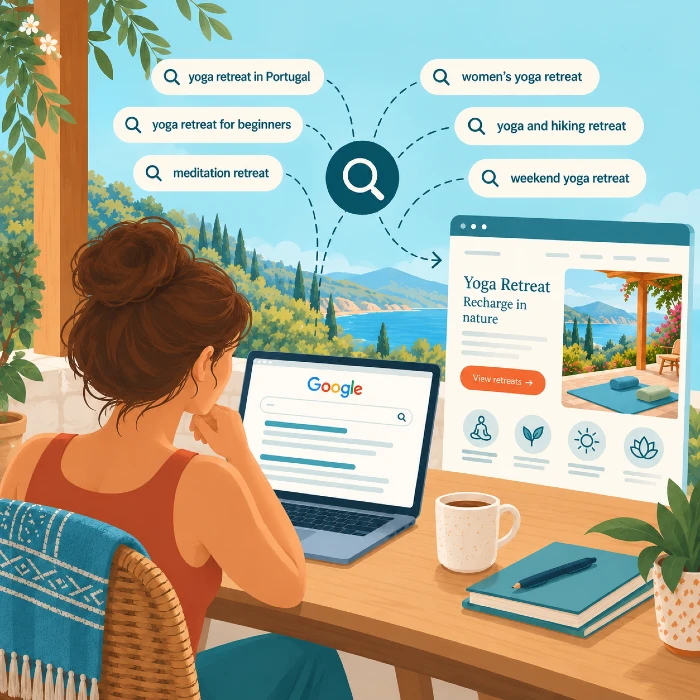
This is also where search engine optimisation (SEO) can play a role. By understanding the questions people are searching for, you can create content that helps them find answers – and discover your business along the way.
Over time, those resources can keep helping people long after you've published them.
3. Include a gentle next step
Once you've shared something valuable, think about what someone might naturally want to do next.
Perhaps they'd like to read another article, join your email list, explore your services or book a conversation.
Make that next step visible, but don't force it.
Sometimes people will be ready to work with you immediately. Sometimes they'll come back months later. And sometimes they'll simply take what they need and move on.
All three outcomes are OK.

Give freely, ask honestly
At Wildheart, we try to practise what we encourage others to do.
We share advice through our blog, our Marketing Mantras and our free guide, The Marketing Mindshift, because we believe marketing can feel more authentic, creative and enjoyable than many people expect.
We also offer free, no-obligation consultations, giving people the opportunity to talk through their challenges and get some useful advice, whether or not they decide to work with us.
Sharing what we know is one way we build relationships. Offering our services is how we help people take things further when they're ready.
And that's the heart of relationship marketing.
It also brings us back to our previous Marketing Mantra, Everything is connected. The knowledge you share, the trust you build and the relationships you nurture are all part of the bigger picture. When you approach marketing holistically, each small act of generosity can help strengthen those connections over time.
It's not about giving something away so you can get something back. It's about being helpful, building trust and creating genuine connections – while being clear about the ways you can support people.
So the next time you're wondering what to share in your marketing, try asking yourself:
“What could I give my audience today that would genuinely make their lives a little easier?”
Start there.
And when the time feels right, don't be afraid to ask.
Want to approach marketing a little differently?
Download our free guide, The Marketing Mindshift, if you'd like to explore things yourself, or book a free consultation if you'd prefer to talk things through.

Join the Mindful Marketing Movement
Learn how to grow your business authentically & get your FREE guide